The Physics of the First Twelve Minutes
Home ovens are designed to roast chickens and dry out moisture—they are vented specifically so steam escapes. For crusty bread, a dry oven at the start of the bake is the enemy. If hot dry air hits raw dough immediately, the outer skin dehydrates and sets into a rigid leather shell within four minutes, locking the loaf in place before the interior gas has finished expanding.
When you surround cold or room-temperature dough with concentrated steam during the first 15 to 20 minutes, three things happen simultaneously:
- Condensation heat transfer: Water vapour condensing on the cool dough surface transfers heat far faster than dry air, accelerating oven spring.
- Elastic skin extension: Surface moisture keeps the outer dough extensible so it can balloon upward along your score line without tearing randomly.
- Starch gelatinization: Surface starches dissolve into a thin gel that later bakes into a glossy, crackly, blistered crust once the steam is vented.
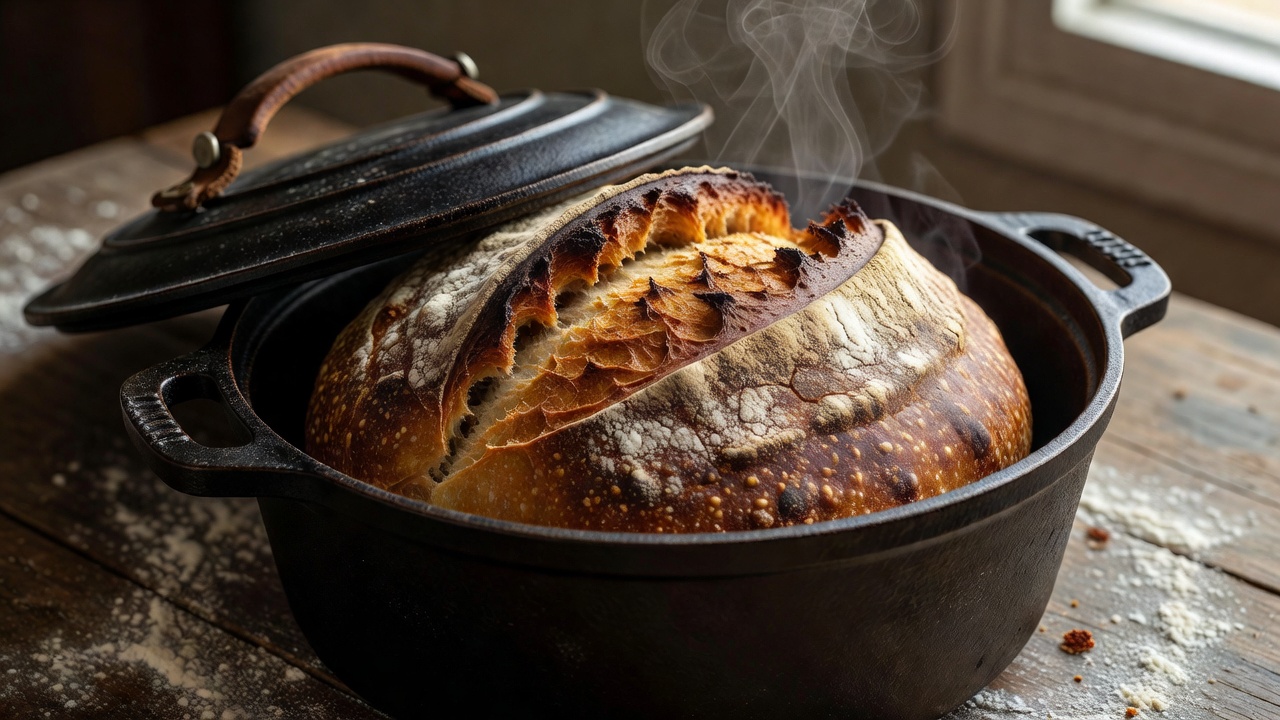
Dutch Oven vs. Baking Steel vs. Cordierite Stone
You do not need to spray water onto your oven light bulb (which frequently shatters the glass). Instead, match your baking vessel to the style of bread you are making.
Scoring with a Lame: Angle Determines the Ear
Scoring is not merely decorative signatures; it is a controlled expansion joint. When you slash the taut surface of a proofed loaf right before it enters the oven, you tell the rapidly expanding gases exactly where to open up.
If you hold your razor blade or serrated bread knife perpendicular (90 degrees) to the dough surface, the cut opens symmetrically like a wide flower—ideal for decorative cross-slashes on rye boules or soft dinner rolls. If you hold the blade at a shallow 30-degree angle almost parallel to the worktop and slice decisively 1 centimetre deep from end to end, you create an overhanging flap of dough. As the loaf expands, that thin flap curls upward and caramelizes into a prized, crunchy "ear."
"Cold dough scores cleanly; warm dough drags on the blade. Chill your shaped loaf in the refrigerator for at least an hour—or overnight—before scoring straight from the fridge." — Bench Note #11, Scoring & Thermal Contrast
Why Baking Dark Matters (Maillard & Caramelization)
Many home bakers pull their bread out of the oven ten minutes too early, settling for a pale blonde crust that softens into chewy rubber as soon as it cools. True bread flavour lives in the crust. Above 150°C (300°F), amino acids and reducing sugars undergo the Maillard reaction, creating hundreds of savoury, nutty, roasted aroma compounds. Above 180°C (355°F), sucrose and maltose caramelize into bittersweet mahogany notes that balance the mild tang of fermentation.
Let the edges of your country loaf reach a deep chestnut brown before removing it from the oven. Then comes the hardest step in baking: leave the loaf alone on a wire cooling rack for at least 90 minutes. While a hot loaf cools, internal steam continues gelatinizing the crumb and migrating outward. Slicing into a roaring-hot boule vents that steam prematurely, leaving the remaining crumb tacky and gummy.
Next: Apply temperature control to cold butter and flaky morning pastry →